
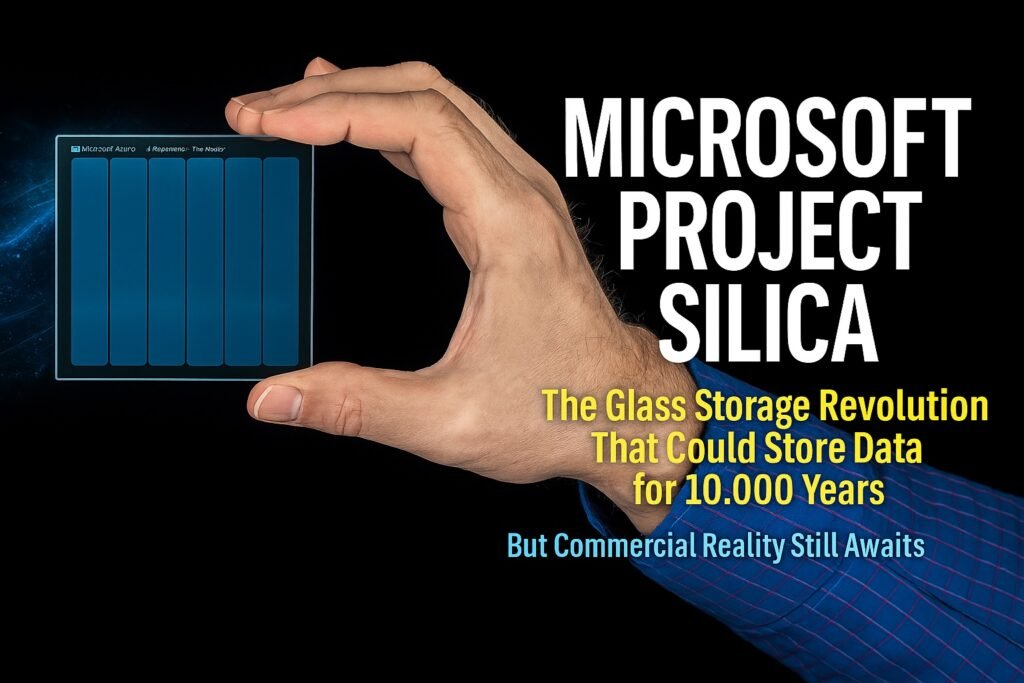
In the depths of Microsoft’s research laboratories, scientists have achieved something that sounds like science fiction: storing 7TB of data on a piece of glass the size of a drink coaster, with a lifespan measured not in years, but in millennia. Project Silica represents Microsoft’s ambitious attempt to solve one of the digital age’s most pressing problems—how to preserve humanity’s exponentially growing data archives without the constant, expensive cycle of migration and decay that plagues current storage technologies.
The promise is tantalizing. Imagine storing vast libraries of human knowledge, cultural heritage, and scientific data on virtually indestructible glass plates that require no electricity, no cooling, and no maintenance for 10,000 years or more. However, the reality as of August 2025 reveals a more nuanced picture: while Microsoft has made remarkable technical progress, Project Silica remains firmly in the research and development phase, with commercial availability still years away and significant technical hurdles yet to be overcome.
Understanding Project Silica’s current state requires examining not just its impressive capabilities, but also its limitations, the competitive landscape that’s emerging, and the practical challenges that separate laboratory demonstrations from market-ready solutions.
The Digital Preservation Crisis: Why Glass Storage Matters
The Hidden Cost of Digital Immortality
Modern civilization generates data at an unprecedented scale—approximately 2.5 quintillion bytes daily according to industry estimates. Yet the technologies we rely on to store this information are fundamentally fragile and temporary. Traditional hard disk drives typically last three to five years in operational environments, while magnetic tapes may survive five to seven years under optimal conditions.
This creates what storage experts call the “digital dark age” problem. Unlike physical artifacts that can survive for centuries, digital information requires constant vigilance and regular migration to newer storage media. For organizations managing vast archives—governments preserving historical records, film studios protecting decades of content, scientific institutions maintaining research data, or healthcare systems storing genomic information—this migration cycle represents both enormous ongoing costs and significant risks of data loss.
The total cost of ownership for traditional archival storage extends far beyond the initial media purchase. It includes the energy costs of powering storage systems, cooling requirements for data centers, and the human resources needed to manage regular data migrations. According to Microsoft’s research, these ongoing operational costs often exceed the initial hardware investment over a storage system’s lifetime.
Beyond Technical Limitations: Environmental and Economic Pressures
The environmental impact of constantly refreshing digital archives has become increasingly problematic as organizations face pressure to reduce their carbon footprints. Data centers already consume approximately 1% of global electricity, and much of this energy goes toward maintaining and migrating data that may be accessed rarely, if ever.
Project Silica addresses these challenges through what Microsoft calls a “medium-up” design philosophy. Rather than adapting software to work with existing storage technologies, Microsoft’s researchers co-designed every component of the system—from the quartz glass storage medium to the robotic library infrastructure and cloud service integration—to work in optimized synergy.
The choice of fused silica glass (pure silicon dioxide) was deliberate. This material offers extraordinary chemical and thermal stability, resistance to electromagnetic interference, and immunity to the “bit rot” that affects magnetic storage over time. Most importantly, it enables a Write-Once-Read-Many (WORM) architecture that eliminates the need for constant integrity checking and data scrubbing that consume energy in traditional storage systems.
The Technical Marvel: How Femtosecond Lasers Write Data in Glass
Precision at the Speed of Light
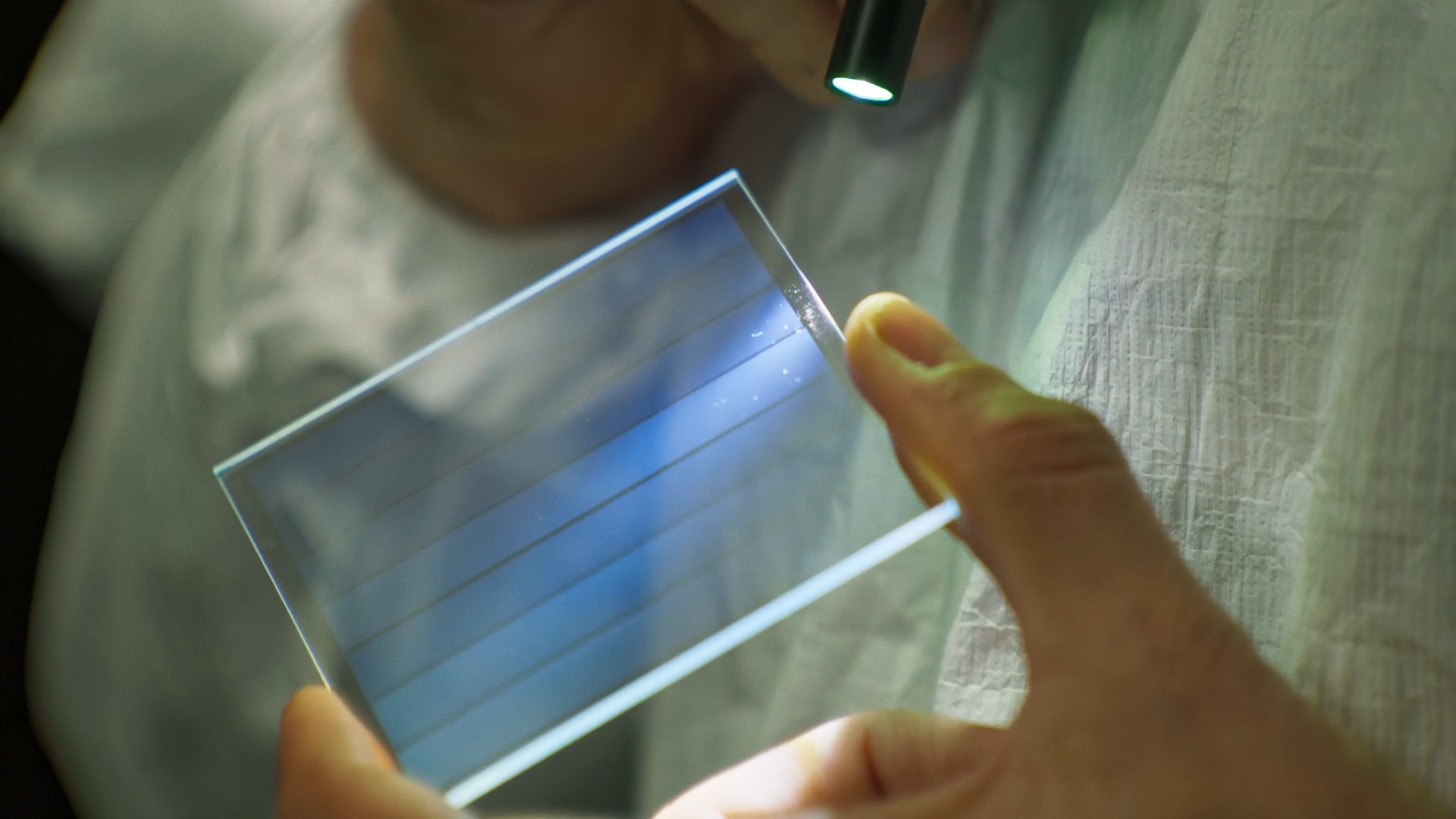
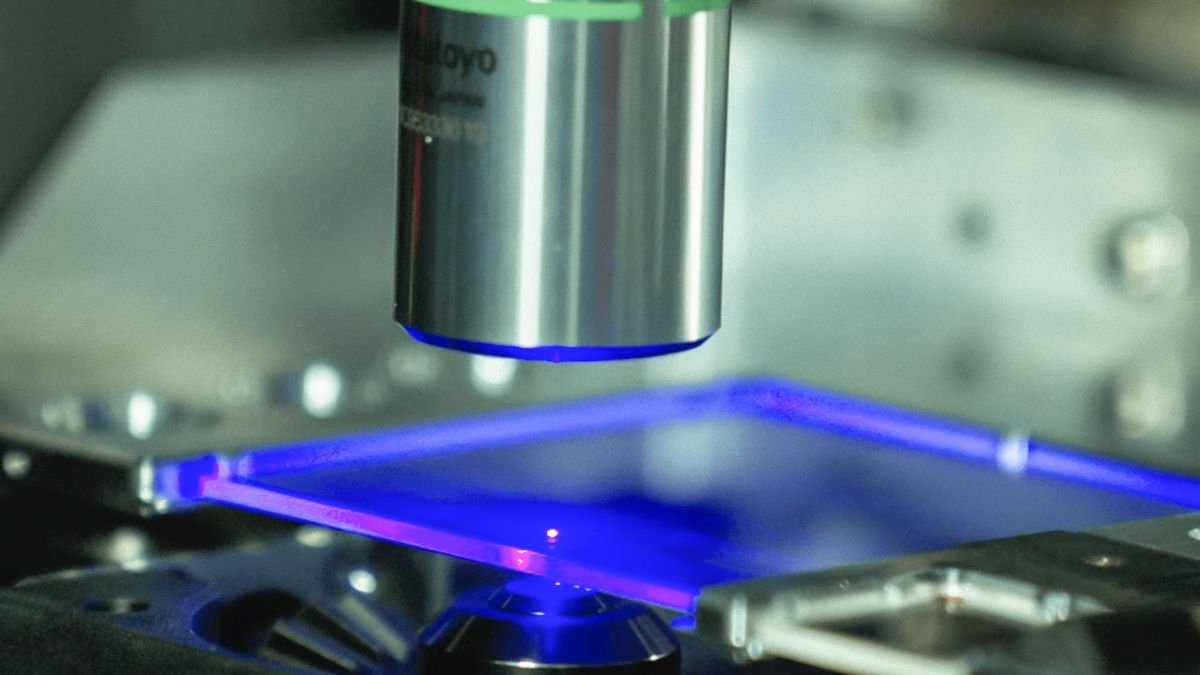
The core innovation of Project Silica lies in its use of femtosecond lasers—devices that emit optical pulses lasting mere quadrillionths of a second. These ultra-short pulses create permanent, microscopic structural changes within the bulk glass material, forming what researchers call “voxels” (three-dimensional pixels) that encode data in multiple dimensions and layers.
The writing process is remarkably precise. The femtosecond laser induces nanoscale modifications in the glass’s refractive structure, creating birefringent patterns that alter how polarized light passes through the material. Data is encoded not just in the presence or absence of these modifications, but in their orientation, depth, and the way they affect light polarization. This multi-dimensional approach allows for much higher data density than traditional two-dimensional storage methods.
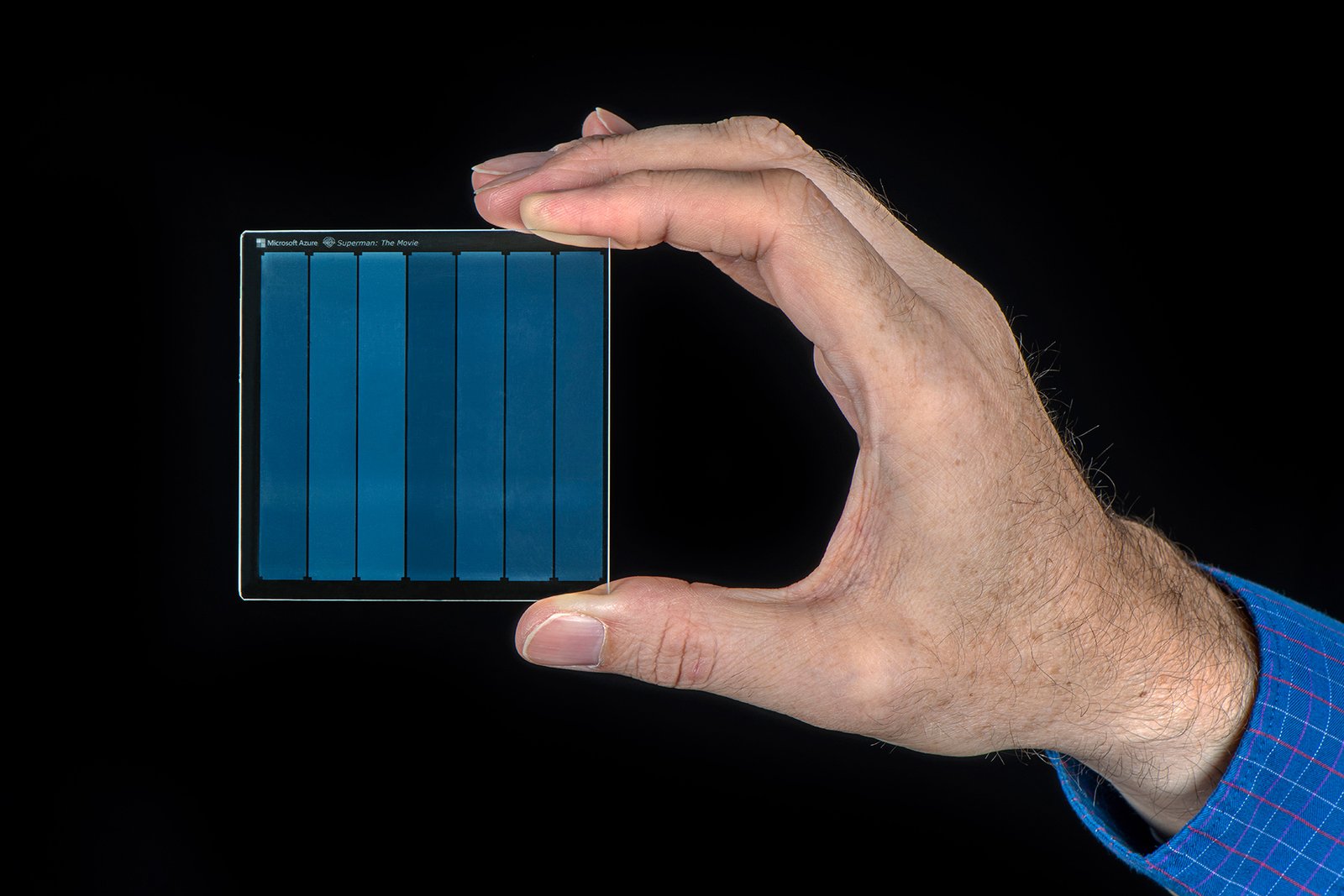
Current specifications show that Microsoft has progressed from storing 75.6GB (the Superman movie demonstration in 2019) to achieving 7TB capacity on the same 75mm x 75mm x 2mm glass plate format. This represents roughly a 100-fold improvement in density over six years of development, though Microsoft has not disclosed detailed technical specifications about how this density scaling was achieved.
The writing process remains the primary technical bottleneck. While exact speeds are not publicly disclosed, research indicates that inscribing several terabytes of data on a single plate requires hours of laser processing time. The precision required for multi-layer, three-dimensional writing means that current write operations cannot be easily parallelized without sophisticated coordination systems.
Reading Through Light and Artificial Intelligence
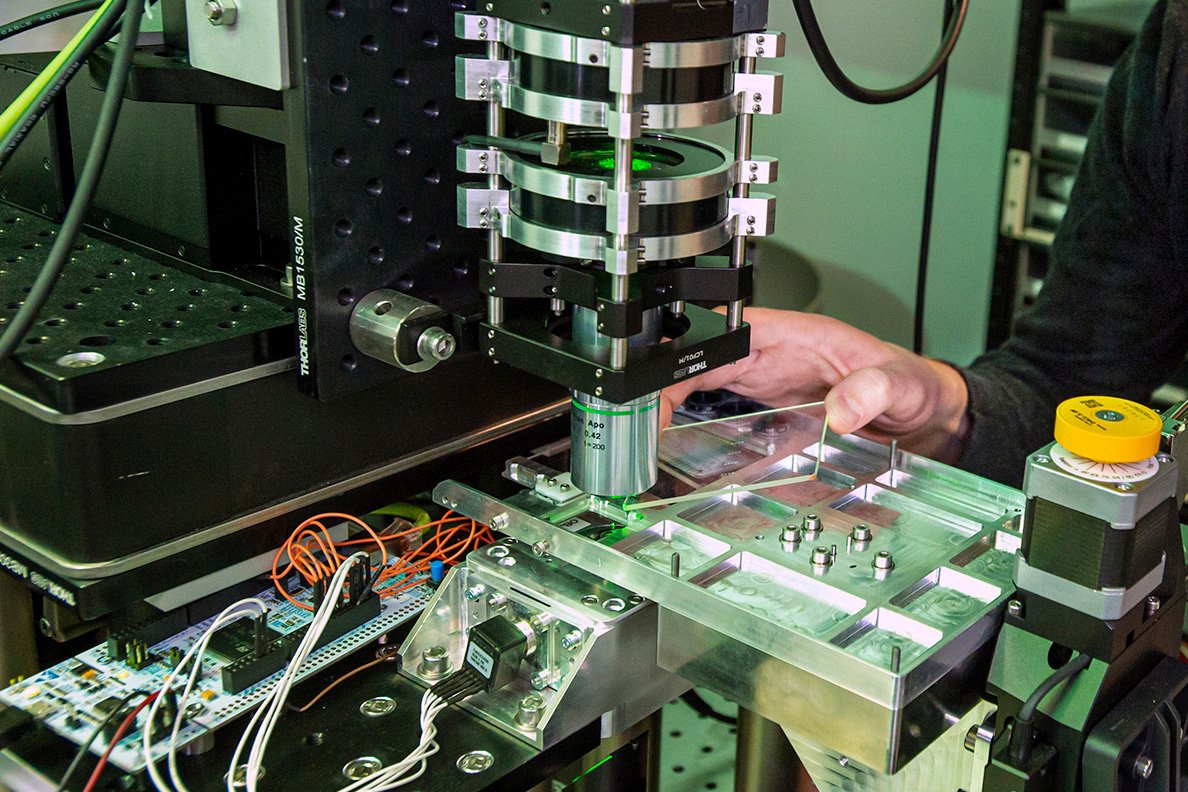
The reading process demonstrates Microsoft’s systems integration expertise. Glass plates are positioned by robotic systems under computer-controlled polarization microscopes that capture detailed images of the voxel patterns within each layer of the glass. The challenge lies in converting these analog optical patterns back into digital data with perfect accuracy.
Microsoft’s solution leverages Azure’s AI infrastructure to decode the optical patterns. Machine learning algorithms, evolved from convolutional neural network architectures, analyze the microscopy images to identify individual voxels and their encoded values. This AI-powered decoding compensates for optical variations, manufacturing tolerances, and potential interference between adjacent data storage locations.
The current read performance, documented in Microsoft’s research publications, shows throughput of approximately 30-60 MB/s per drive in system modeling. However, the access pattern is fundamentally different from traditional storage. Project Silica is designed for bulk sequential reads rather than random access, with a service level objective of “15 hours to last byte” for large data retrievals.
This performance profile makes clear that Project Silica is not intended to compete with operational storage systems, but rather to serve as what Microsoft calls an “ultra-cold” archive tier—a final destination for data that must be preserved but accessed infrequently.
The Reality Check: Commercial Viability and Market Competition
The Three-to-Four Development Stages Ahead
Despite impressive technical demonstrations, Microsoft researchers acknowledge that Project Silica requires “3-4 additional development stages” before commercial deployment. The challenges extend beyond improving the core storage technology to encompass manufacturing scalability, cost reduction, and ecosystem development.
The write hardware remains prohibitively expensive for widespread deployment. Femtosecond lasers capable of the precision required for multi-terabyte glass inscription represent significant capital investments, and the throughput limitations mean that write capacity must be carefully matched to demand. Microsoft’s current architecture separates read and write drives to avoid resource stranding, but this adds complexity and cost to the overall system.
Manufacturing scalability presents additional challenges. The precision optics, robotics, and mechanical systems required for reliable operation must transition from research laboratory prototypes to production-ready, serviceable designs. This includes not just the core storage technology, but the entire ecosystem of handling, verification, and library management systems.
As of August 2025, Microsoft has not announced commercial pricing, availability dates, or specific customer partnerships beyond pilot projects. The company’s communications continue to frame Project Silica as research moving toward potential Azure archival service integration, suggesting an “internal first” deployment strategy rather than immediate market availability.
The Cerabyte Challenge: Competition Heats Up
The competitive landscape shifted significantly in 2024-2025 with the emergence of Cerabyte, a German startup developing ceramic-based glass storage technology. While both companies use femtosecond lasers to inscribe data on glass-like materials, Cerabyte has pursued a more aggressive commercialization timeline and performance targets.
Cerabyte’s published roadmap promises dramatically different performance characteristics than Project Silica. The company targets 1 petabyte per rack with 90-second access times by 2025-2026, scaling to over 100 petabytes per rack with sub-10-second access by 2030. If achieved, these specifications would position ceramic glass storage as an “active archive” solution rather than Microsoft’s “deep archive” approach.
More importantly, Cerabyte has secured strategic investments from Western Digital and Pure Storage, two major players in the enterprise storage industry. According to industry analysis from Storage Newsletter, these partnerships provide Cerabyte with manufacturing expertise, distribution channels, and market credibility that could accelerate commercial deployment.
This competitive dynamic suggests that the future of glass-based storage may not be a Microsoft monopoly, but rather a technology race with different companies targeting different segments of the archival storage market. Microsoft’s cloud-first approach through Azure competes with Cerabyte’s strategy of partnering with established storage vendors for broader market access.
Technical Limitations and Use Case Constraints
Project Silica’s WORM (Write-Once-Read-Many) nature imposes fundamental constraints on its applicability. Unlike traditional storage systems that can be updated and modified, glass storage represents a final archive state. While this eliminates data corruption risks and provides inherent ransomware protection, it also means the technology cannot serve operational workloads that require data modification.
The access speed limitations further restrict potential use cases. With read throughput measured in tens of megabytes per second and access latencies measured in hours, Project Silica is unsuitable for any application requiring responsive data access. This positions it strictly as a complement to, rather than replacement for, existing storage hierarchies.
Temperature and environmental requirements, while less stringent than magnetic storage, still impose constraints on deployment locations and handling procedures. The precision required for the optical reading systems means that vibration, contamination, and mechanical stress must be carefully controlled throughout the storage lifecycle.
Infrastructure Innovation: Robotics and the Passive Archive
Beyond Traditional Data Centers
Project Silica’s infrastructure requirements represent a fundamental departure from traditional data center design. The storage library is designed to be entirely passive, consuming no electricity for data preservation once information is written to glass. This contrasts sharply with conventional archives that require constant power for cooling, monitoring, and integrity verification.
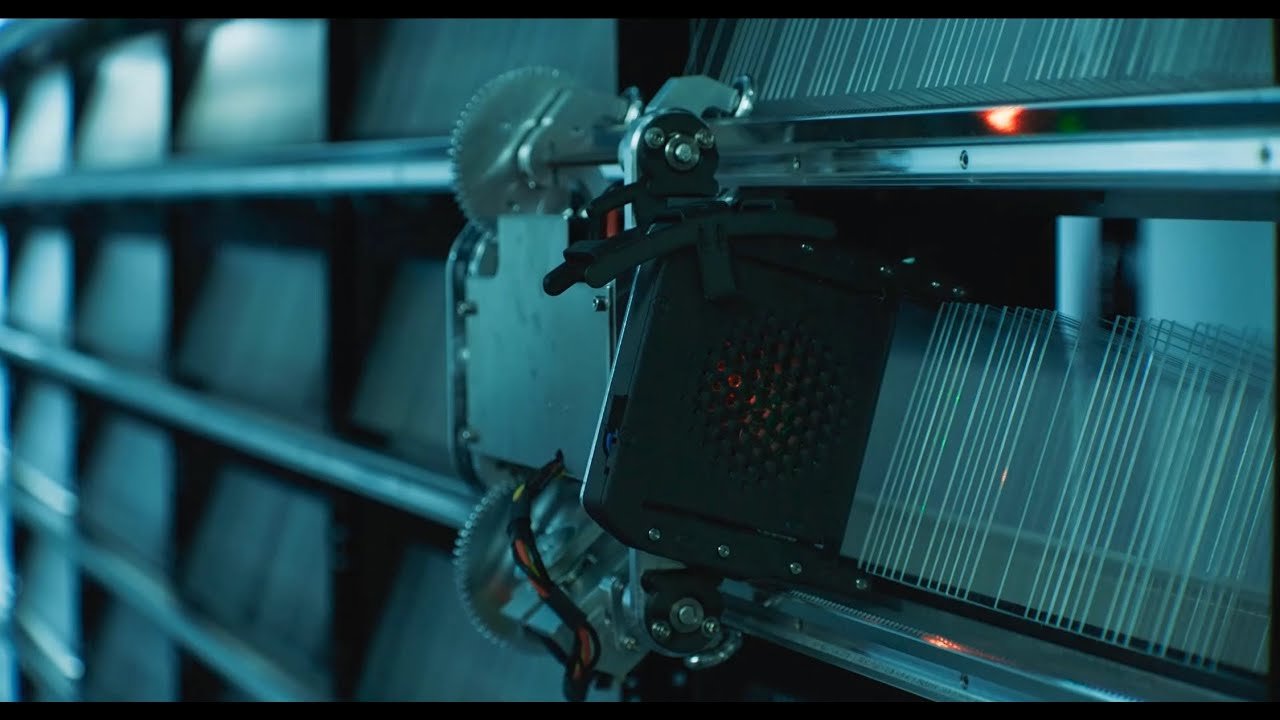
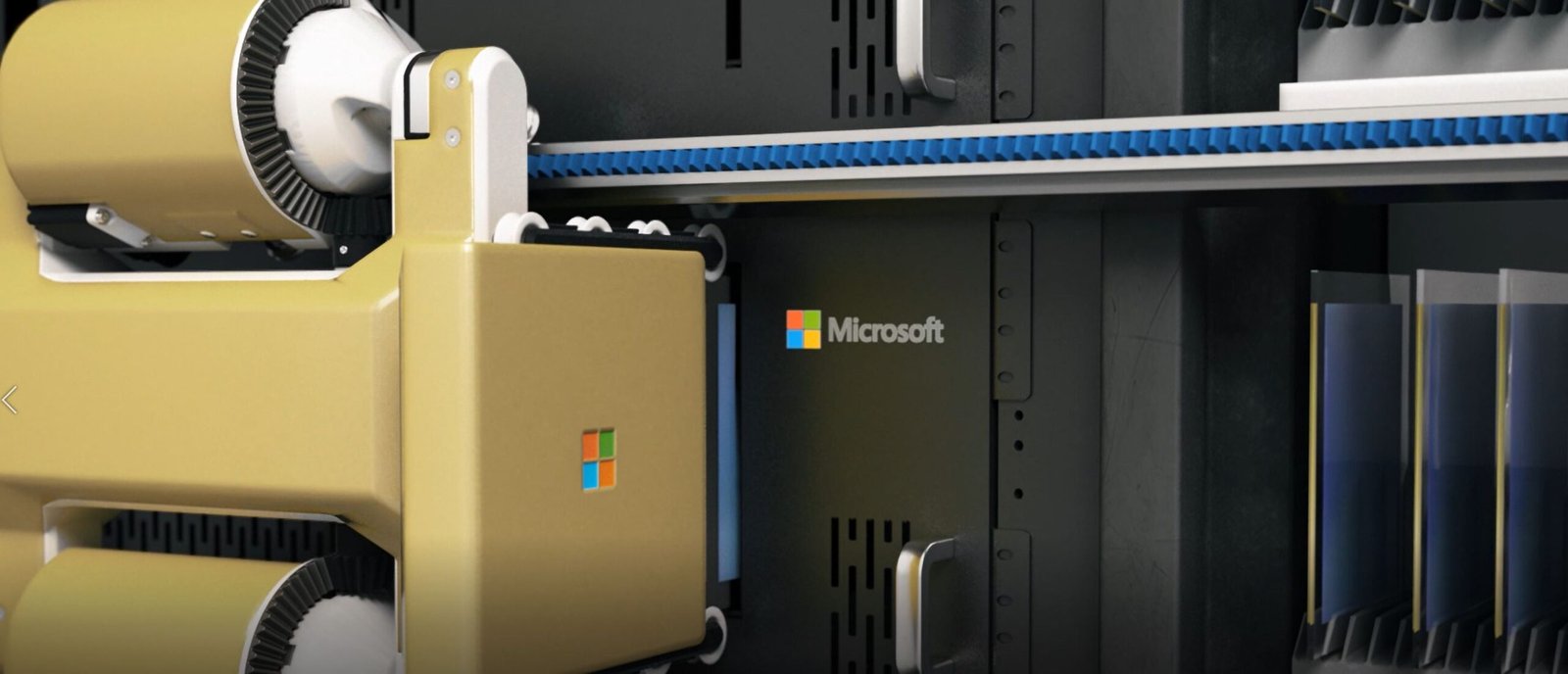
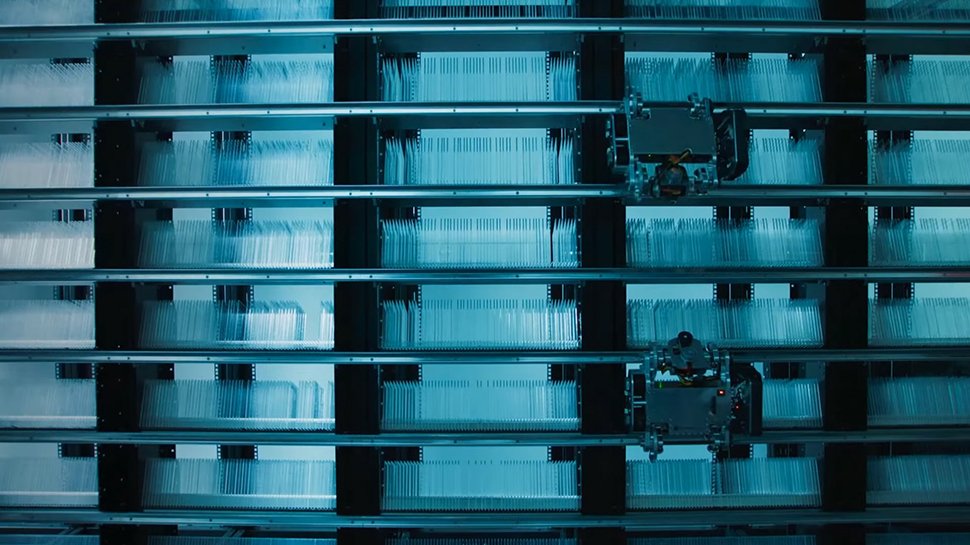
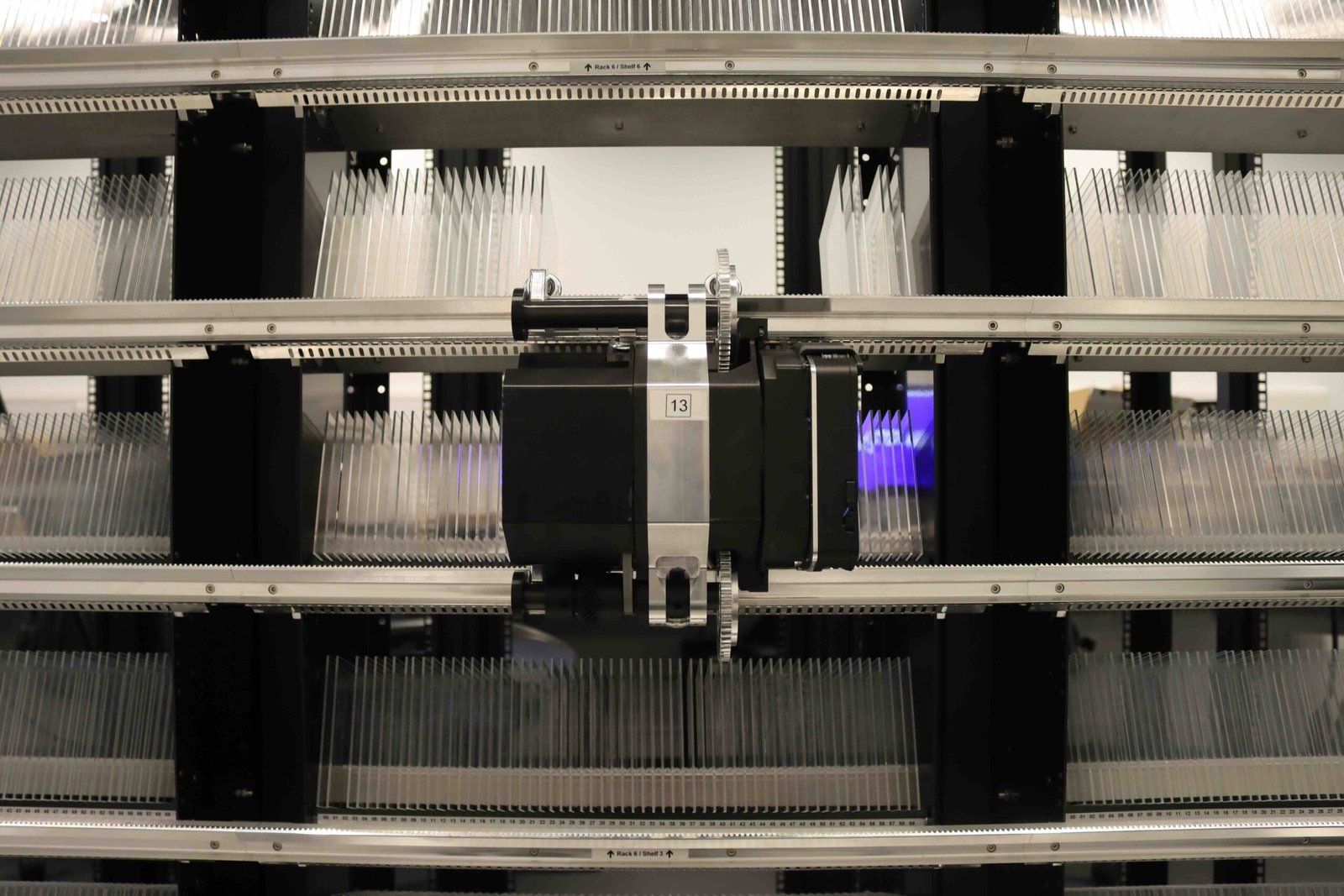
The robotic systems, designated as RASCAL (Robotic Archive Storage for Cloud Archive Libraries), represent Microsoft’s attempt to solve the mechanical challenges of managing physical media at cloud scale. Rather than traditional gantry-based systems used in tape libraries, Project Silica employs multiple autonomous shuttles that navigate on passive rails between storage racks and reading stations.
These battery-powered robots can operate independently, providing redundancy and load balancing that improves overall system availability. The shuttle architecture allows for maintenance and expansion without taking the entire library offline, and the distributed design scales more gracefully than centralized mechanical systems.
The library design targets specific performance characteristics optimized for cloud archival workloads. Microsoft’s system modeling shows that 20 read drives operating at approximately 60 MB/s each, supported by 20 robotic shuttles, can meet service level objectives for typical enterprise archival access patterns. The key insight is that most archival requests are either small files that benefit from quick mechanical access or large sequential reads where throughput matters more than latency.
Air-Gap Security by Design
One of Project Silica’s most compelling features is its inherent security model. The WORM nature of the storage medium, combined with physical separation between write and read operations, creates what Microsoft calls “air-gap-by-design” security. Once data is written to glass and moved to the passive library, it becomes physically impossible to modify or delete the stored information through software attacks.
This security model provides protection against ransomware attacks that have increasingly targeted backup and archive systems. Traditional backup solutions remain vulnerable because they maintain network connectivity and administrative access paths that can be compromised. Project Silica’s offline nature and write-once characteristics eliminate these attack vectors at the physical layer.
However, this security advantage comes with operational tradeoffs. The inability to update or correct data after writing means that any errors in the initial data preparation become permanent. The system requires careful validation and quality assurance processes before data commitment, adding complexity to operational workflows.
Real-World Applications and Partnership Developments
From Superman to Cultural Heritage
The evolution of Project Silica’s applications tells the story of its maturation from research curiosity to practical technology. The initial demonstration storing Warner Bros.’ Superman movie served primarily as a proof-of-concept for media durability and data integrity. The glass plate survived extreme stress testing including boiling water, microwave radiation, scratching, and electromagnetic fields, validating the medium’s claimed durability.
More recent partnerships indicate Microsoft’s focus on applications where Project Silica’s unique characteristics provide clear advantages. The Global Music Vault project, developed in collaboration with Elire Group for deployment in Svalbard, Norway, represents an ambitious attempt to preserve humanity’s musical heritage using glass storage technology.
This project builds on the concept of the existing Global Seed Vault, extending the preservation model to digital cultural assets. According to reporting by Unlocked Microsoft, the initiative aims to create a comprehensive archive of global music that could survive environmental catastrophes or societal disruptions that might threaten traditional digital archives.
The partnership model also demonstrates Microsoft’s approach to market development. Rather than competing directly with existing archival service providers, the company is working with specialized organizations that have unique preservation requirements and can justify the premium costs of glass storage technology.
Government and Institutional Interest
While specific government partnerships remain confidential, industry analysis suggests significant interest from national archives, regulatory agencies, and research institutions. The combination of multi-millennium durability, inherent security, and zero ongoing maintenance costs creates compelling value propositions for organizations with legal or mission requirements for long-term data preservation.
Healthcare and genomics represent another promising application area. As genomic sequencing costs continue to fall and personalized medicine generates increasing amounts of patient-specific data, the need for permanent, secure storage of health information grows accordingly. The tamper-proof nature of glass storage aligns with regulatory requirements for medical record integrity and long-term patient data protection.
Scientific research institutions face similar challenges preserving observational data, experimental results, and computational models that may prove valuable decades or centuries after collection. Traditional storage systems require ongoing IT management and technical expertise that may not be available to smaller research organizations over extended periods.
The Broader Context: Storage Technology Evolution and Future Predictions
Learning from Historical Technology Transitions
Project Silica’s development trajectory mirrors historical patterns in storage technology evolution. Like the transition from mechanical to solid-state storage, or from optical to magnetic media, the shift to glass-based archival storage represents both technical innovation and market positioning challenges.
The technology adoption lifecycle for enterprise storage typically spans decades from initial research to widespread deployment. Magnetic tape storage, still widely used for archival applications, required approximately 20 years to mature from experimental systems to reliable, cost-effective solutions. Project Silica appears to be roughly midway through this development cycle, with core technical feasibility demonstrated but significant engineering and commercial challenges remaining.
The emergence of competing approaches like DNA storage and advanced optical technologies suggests that the archival storage market will likely support multiple solutions optimized for different use cases. As we explore in our analysis of technological predictions for 2030, the storage industry is experiencing simultaneous innovation across multiple fronts, from quantum storage concepts to biological information encoding.
Integration with AI and Cloud Computing Trends
Project Silica’s reliance on artificial intelligence for data decoding represents a broader trend toward AI-enhanced storage systems. The ability to use machine learning algorithms to compensate for physical variations and optimize read performance demonstrates how AI capabilities are becoming integral to storage technology rather than separate applications.
This integration creates interesting synergies with Microsoft’s broader AI strategy. The computational resources required for glass data decoding can leverage the same Azure AI infrastructure used for other machine learning workloads, potentially improving utilization and reducing overall system costs.
However, this dependency on AI also creates new categories of technical risk. As we’ve documented in our examination of AI system failures and safety considerations, machine learning systems can fail in unexpected ways or degrade over time. For a storage technology designed to last millennia, ensuring the long-term viability and accuracy of AI-based decoding algorithms presents unprecedented challenges.
Quantum Computing Implications
The intersection of quantum computing development with long-term data storage creates interesting technical questions. Current encryption methods used to protect archived data may become vulnerable to quantum computing attacks within decades, potentially compromising data stored on systems designed to last millennia.
Microsoft’s quantum computing research, including developments in quantum error correction and cryptographic algorithms, may influence Project Silica’s security architecture. As we’ve analyzed in our coverage of quantum computing breakthroughs, the timeline for practical quantum computers capable of breaking current encryption remains uncertain but represents a real consideration for ultra-long-term storage systems.
The glass storage medium itself appears quantum-resistant from a physical perspective, but the data encoding and access control systems may require updates to maintain security over extended periods. This highlights one of the fundamental challenges in designing technology for multi-millennial lifespans in an era of accelerating technological change.
Economic Analysis: Cost Models and Market Viability
Total Cost of Ownership Over Millennia
Project Silica’s economic model fundamentally differs from traditional storage technologies by pushing costs toward the initial data writing phase while eliminating ongoing operational expenses. This creates an interesting financial dynamic where the value proposition improves dramatically over extended time periods.
Traditional archival storage systems incur continuous costs for power, cooling, maintenance, and periodic data migration. Industry studies by organizations like IDC show that these operational costs typically exceed the initial hardware investment over a storage system’s operational lifetime. For archives intended to persist for decades or centuries, the cumulative operational costs become prohibitive.
Glass storage eliminates most operational costs after the initial data writing. The passive library design requires no electricity for data preservation, minimal environmental controls, and no periodic maintenance beyond occasional robotic system servicing. The primary ongoing cost is the physical space required for storage racks and access to reading systems when data retrieval is needed.
However, the upfront costs remain substantial. Femtosecond laser systems, precision robotics, and specialized facility requirements represent significant capital investments. Without published pricing from Microsoft, industry estimates suggest cost-per-terabyte figures that are orders of magnitude higher than traditional storage media for the initial data writing.
Break-Even Analysis and Market Positioning
The economic viability of glass storage depends heavily on the intended storage duration and access patterns. For data that must be preserved for decades with minimal access, the elimination of ongoing operational costs can justify higher initial costs. For data with regular access requirements or shorter retention periods, traditional storage systems remain more cost-effective.
This economic profile naturally positions Project Silica as a premium archival solution for specific market segments rather than a general-purpose storage technology. Organizations with regulatory requirements for century-scale data retention, cultural institutions preserving digital heritage, or research facilities managing irreplaceable datasets represent the most likely early adopters.
The competitive landscape complicates this positioning. If Cerabyte or other competitors achieve their promised performance targets at competitive costs, the market for glass storage could expand beyond ultra-long-term archives to include more active archival applications with higher access requirements and shorter retention periods.
Environmental Impact and Sustainability Considerations
Carbon Footprint Analysis
Microsoft positions Project Silica as an environmentally superior solution compared to traditional archival storage, primarily through the elimination of ongoing energy consumption. Data centers currently consume approximately 1% of global electricity production, with a significant portion dedicated to storage systems that maintain rarely accessed archived data.
The environmental benefits of glass storage compound over time. While the initial manufacturing process for glass plates and laser inscription requires energy, the passive nature of the storage medium eliminates the continuous energy consumption required for traditional archives. Over storage periods measured in decades or centuries, this can result in dramatically lower total energy consumption and carbon emissions.
However, a complete environmental assessment must consider the embodied carbon in the manufacturing process. Producing ultra-pure fused silica, precision optics, and femtosecond laser systems requires energy-intensive manufacturing processes. The environmental sustainability of glass storage ultimately depends on achieving sufficient utilization and longevity to amortize these upfront environmental costs.
The lack of publicly available lifecycle assessment data from Microsoft makes definitive environmental comparisons difficult. Independent analysis by environmental organizations would be valuable for validating the claimed sustainability benefits and identifying potential areas for improvement in the manufacturing and deployment processes.
Resource Utilization and Recycling
The materials science aspects of Project Silica present both opportunities and challenges for sustainable technology deployment. Fused silica glass is primarily composed of silicon dioxide, one of the most abundant materials on Earth, suggesting good long-term resource availability.
However, the precision manufacturing requirements for optical-quality glass substrates and the specialized equipment needed for femtosecond laser processing create dependencies on rare earth elements and highly specialized manufacturing capabilities. The sustainability of glass storage technology over extended periods will depend on developing recycling processes for both the storage media and the associated hardware systems.
The modular design of Project Silica’s robotics and reading systems may facilitate component upgrading and recycling. As technology evolves over the decades-long operational life of a glass storage installation, individual components can potentially be replaced or upgraded without disturbing the stored data or requiring wholesale system replacement.
Technical Limitations and Engineering Challenges
Current Performance Bottlenecks
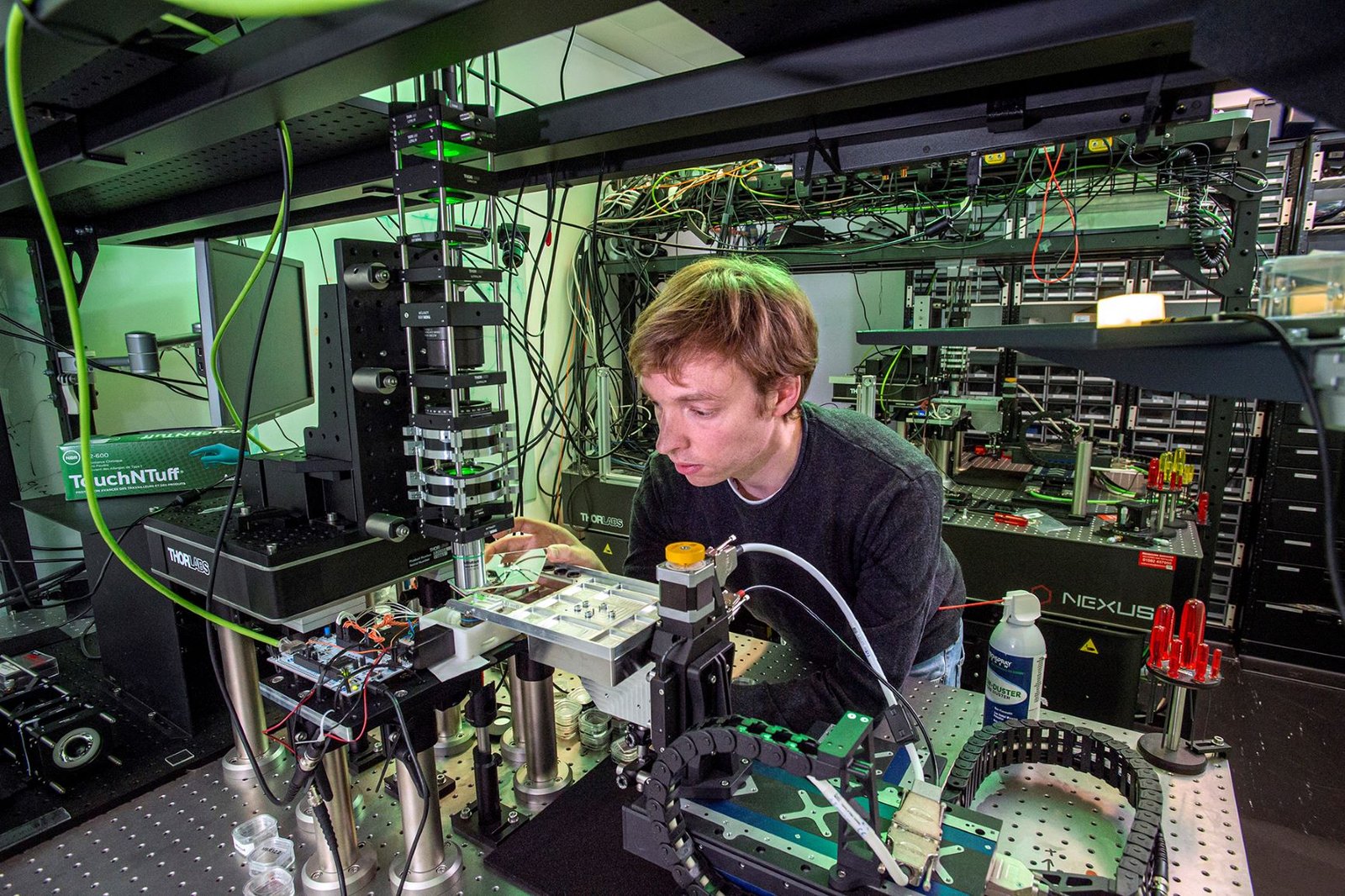
The most significant technical limitation of Project Silica remains the write process speed and cost. Inscribing multiple terabytes of data using femtosecond laser systems requires hours of processing time per glass plate, creating throughput constraints that limit practical deployment scenarios.
The precision required for multi-layer three-dimensional data encoding means that write operations cannot be easily parallelized without sophisticated coordination systems. Multiple laser systems operating simultaneously on different areas of the same glass plate would require precise synchronization to avoid interference and ensure data integrity.
Read performance, while adequate for archival applications, imposes constraints on use cases that require responsive data access. The 30-60 MB/s read throughput per drive, combined with mechanical access delays for robotic media handling, creates service level characteristics suitable only for bulk sequential access patterns.
The AI-dependent decode process introduces additional complexity and potential failure modes. Machine learning algorithms require ongoing validation and potential retraining to maintain accuracy over extended periods. For storage systems designed to last millennia, ensuring the long-term viability of AI-based decoding represents an unprecedented challenge.
Manufacturing and Quality Control Challenges
Scaling Project Silica from laboratory demonstration to commercial deployment requires solving manufacturing challenges that extend beyond the core storage technology. The precision optics, mechanical systems, and quality control processes necessary for reliable operation must transition from research prototypes to production-ready designs.
Glass substrate manufacturing must achieve optical quality and dimensional precision that exceeds requirements for most commercial applications. Small variations in thickness, optical clarity, or surface quality can affect data writing and reading accuracy, requiring manufacturing tolerances that may be difficult to achieve cost-effectively at scale.
The robotic handling systems must operate reliably over decades in environments that may include temperature variations, vibration, and potential contamination. Traditional data center equipment is designed for controlled environments with regular maintenance, while Project Silica’s passive library concept requires much higher reliability and longer maintenance intervals.
Quality assurance processes for written data present unique challenges. Traditional storage media can be verified by reading data immediately after writing, but the multi-dimensional nature of glass storage and the AI-dependent decode process make comprehensive verification more complex and time-consuming.
Future Outlook: Commercial Reality and Market Evolution
Timeline to Market Availability
Based on Microsoft’s current development status and industry expert assessments, commercial availability of Project Silica appears to be several years away. The company’s acknowledgment that “3-4 additional development stages” are required suggests a timeline extending into the late 2020s for initial commercial deployments.
Microsoft’s strategy appears focused on initial deployment through Azure cloud services rather than direct hardware sales. This approach allows the company to control the entire technology stack, optimize operations for specific workloads, and gradually scale production while managing technical risks.
The competitive pressure from Cerabyte and potential other entrants may accelerate Microsoft’s commercialization timeline, but the fundamental technical challenges around write speed, manufacturing scalability, and cost reduction remain significant hurdles that cannot be resolved quickly through increased investment alone.
Market Segmentation and Adoption Patterns
The glass storage market is likely to develop in distinct segments with different performance requirements, cost sensitivity, and adoption timelines. Ultra-long-term cultural and scientific preservation represents the most natural initial market, where the unique durability characteristics of glass storage justify premium pricing.
Government and regulatory archives represent another early adoption segment, particularly for applications where data integrity and security requirements outweigh cost considerations. The inherent tamper-resistance and offline nature of glass storage align well with requirements for legal and regulatory record-keeping.
Enterprise archival applications may develop more slowly, depending on the evolution of competitive technologies and cost reduction progress. Most commercial organizations optimize for shorter-term cost considerations that favor traditional storage technologies over ultra-long-term preservation benefits.
Technology Evolution and Innovation Directions
The future development of glass storage technology will likely focus on addressing current performance limitations while maintaining the core advantages of durability and passive storage. Write speed improvements through enhanced laser systems, parallel processing, or alternative encoding methods represent key areas for innovation.
Integration with emerging technologies like quantum sensing, advanced materials science, and next-generation AI systems may create opportunities for performance improvements and cost reduction. The interdisciplinary nature of glass storage technology means that breakthroughs in seemingly unrelated fields could have significant impacts on commercial viability.
The development of industry standards for glass storage media, data formats, and access protocols will be crucial for broader market adoption. Without standardization, organizations risk technology lock-in that limits long-term data accessibility and increases migration risks.
Conclusion: Revolutionary Technology Awaiting Commercial Reality
Microsoft Project Silica represents a genuine breakthrough in data storage technology, offering unprecedented durability and passive archival capabilities that could fundamentally change how humanity preserves digital information. The ability to store terabytes of data on virtually indestructible glass plates for millennia without ongoing energy consumption addresses real problems in digital preservation and environmental sustainability.
However, the technology remains firmly in the research and development phase as of August 2025. While technical demonstrations prove the feasibility of glass-based data storage, significant challenges in write performance, manufacturing scalability, and cost reduction must be overcome before commercial deployment becomes practical for most applications.
The emergence of competitive technologies like Cerabyte’s ceramic storage systems, combined with continued innovation in traditional storage media, suggests that the future archival storage market will support multiple solutions optimized for different use cases rather than a single dominant technology.
For organizations evaluating long-term data preservation strategies, Project Silica represents a promising future option rather than an immediate solution. The technology’s unique characteristics make it particularly suitable for applications where ultra-long-term preservation justifies premium costs and acceptance of current performance limitations.
The success of Project Silica will ultimately depend on Microsoft’s ability to bridge the gap between laboratory innovation and market-ready products while competing with alternative approaches that may offer different combinations of performance, cost, and availability. The next several years will determine whether glass storage technology can fulfill its promise of revolutionizing digital preservation or remains a fascinating research achievement with limited practical applications.
As the digital preservation crisis continues to grow with exponential data generation, technologies like Project Silica offer hope for creating truly permanent archives of human knowledge and culture. Whether that hope translates into commercial reality depends on solving the complex engineering and economic challenges that separate current research demonstrations from scalable, cost-effective solutions.
The story of Project Silica continues to unfold, representing both the remarkable potential of materials science innovation and the persistent challenges of translating laboratory breakthroughs into technologies that can serve humanity’s growing need for digital preservation across geological timescales.
Recommended Tools & Resources
Accelerate Your Content Creation & Research:
The tools and platforms that help create in-depth technology analysis:
Fliki – Turn Text into Video (20% OFF)
Transform research into engaging video content
Pictory – AI Video Creation (20% OFF with Code: CuriosityAI)
Create professional video content from articles
Use code: CuriosityAI
vidIQ – YouTube Growth & SEO
Optimize technical content for maximum reach
AdCreative.ai – AI-Powered Ad Designs
Design compelling visuals for tech content promotion
ElevenLabs – Realistic AI Voiceovers
Professional narration for technical content
Synthesia – Create AI Avatar Videos
Scale video content creation efficiently
Beehiiv – Build Your Own Newsletter (What We Use)
Share technology insights with your audience
Surfshark VPN – Online Privacy Tool
Secure research and content creation workflow
Murf.ai – Professional AI Voice Generation
High-quality voice synthesis for content
Coursera – Online Learning Platform
Expand knowledge in emerging technologies
NordVPN – Advanced Online Security
Protect sensitive research and communications
Multiplier – Global Team Management
Scale technical content teams internationally
These tools support our ability to research, analyze, and communicate complex technology developments like Microsoft Project Silica. Using these links helps fund continued investigation into breakthrough innovations shaping our digital future.